

History of Trauma
“Trauma in a person decontextualized over time can look like personality. Trauma in a family decontextualized over time can look like family traits. Trauma decontextualized in a people over time can look like culture.”

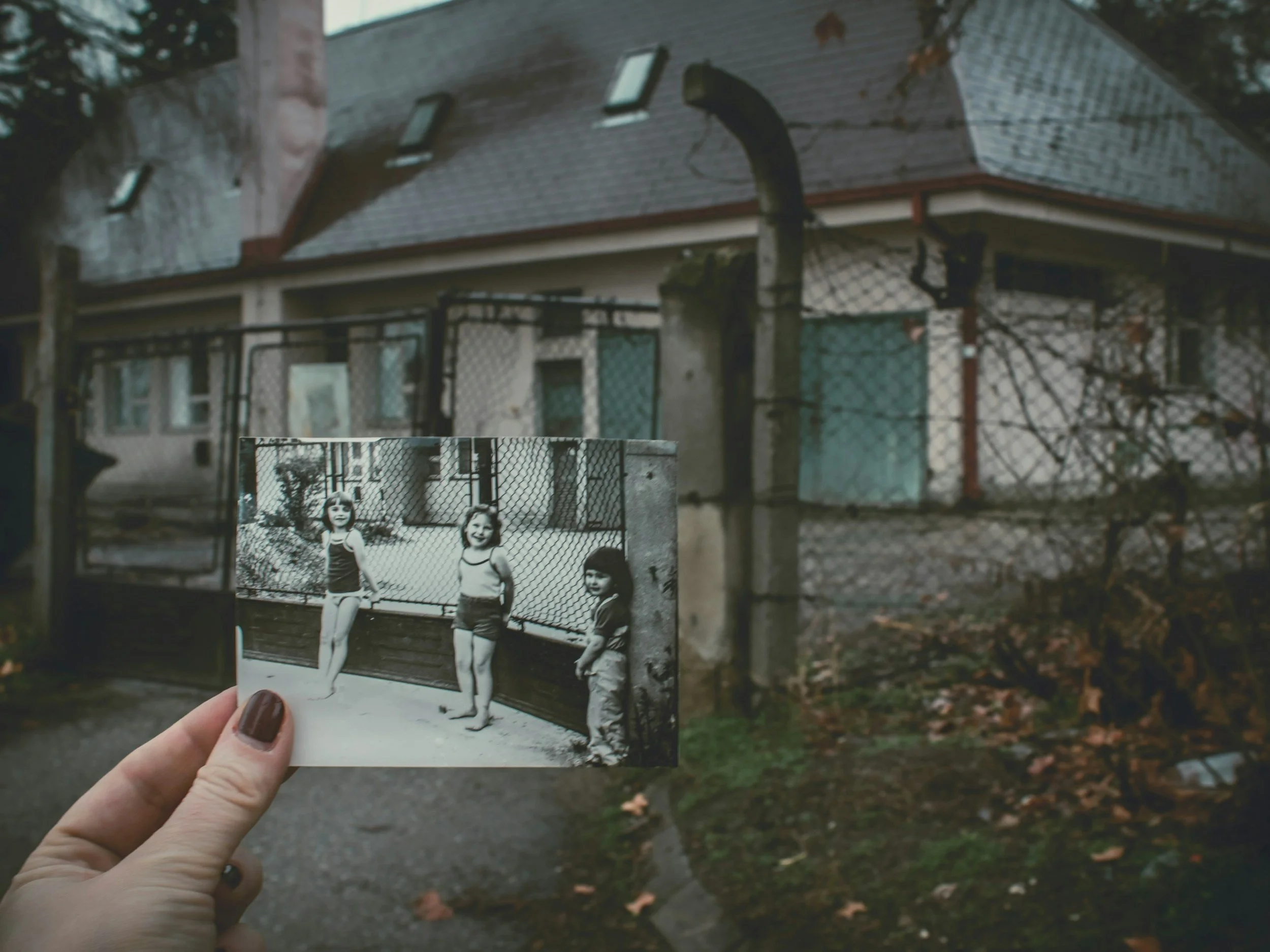
You know how they’ll show flashbacks happening in a movie? You’ve seen the scene: the character loses sense of time and space, suddenly transported, and we as the audience get the visual cue of seeing a memory on the screen, often in black-and-white for further clarity that it is, indeed, a flashback. It is a great storytelling device, but it doesn’t usually happen that way in real life.
Flashbacks don’t occur as vivid visual sequences. They can show up as reliving the event through bodily sensations, feelings and emotions that seem out of nowhere, as dissociation and numbness, or as overstimulation and anger, among others.
Have you ever found yourself in the middle of an argument about something trivial, like about who is going to do the dishes? And then all of a sudden it’s like there are two parts of you: one that is so upset and hurt and scared, and another that is confused as to why you’re upset and hurt, you’re in the safety of your own kitchen talking about jam and butter left on the plates in the sink. And even after the dishes are done and put away, it still doesn’t feel right?
Now you might say, “but I didn’t have it that bad, other people had and have it worse than me!”. The thing is, trauma doesn’t work according to this internalized grading system of not that bad-bad-worse. Trauma can be anything that happens too much, too fast, and too soon for your nervous system to be able to digest and process it. As a result, trauma can sit there, “undigested”, and manifest through a number of symptoms, such as hypervigilance, numbness, dissociation, depression, and many more.
“Trauma isn’t just the sadness that comes from being beaten, or neglected, or insulted. That’s just one layer of it. Trauma also is mourning the childhood you could have had. The childhood other kids around you had. The fact that you could have had a mom who hugged and kissed you when you skinned your knee. Or a dad who stayed and brought you a bouquet of flowers at your graduation. Trauma is mourning the fact that, as an adult, you have to parent yourself. You have to stand in your kitchen, starving, near tears, next to a burnt chicken, and you can’t call your mom to tell her about it, to listen to her tell you that it’s okay, to ask if you can come over for some of her cooking. Instead, you have to pull up your bootstraps and solve the painful puzzle of your life by yourself. What other choice do you have? Nobody else is going to solve it for you.”