

Creative Arts Therapy
What is Creative Arts Therapy?
Art therapy is a form of expressive therapy that utilizes the process of creating and making art while balancing it with psychological theory.
This approach is the one that people most often ask about. I frequently hear questions like, “what if I am not an artist?” or “do I have to make art in session for us to work together?” The short answer is no, you don’t have to be an artist, and no, you don’t have to make art for us to work together. The long answer follows.
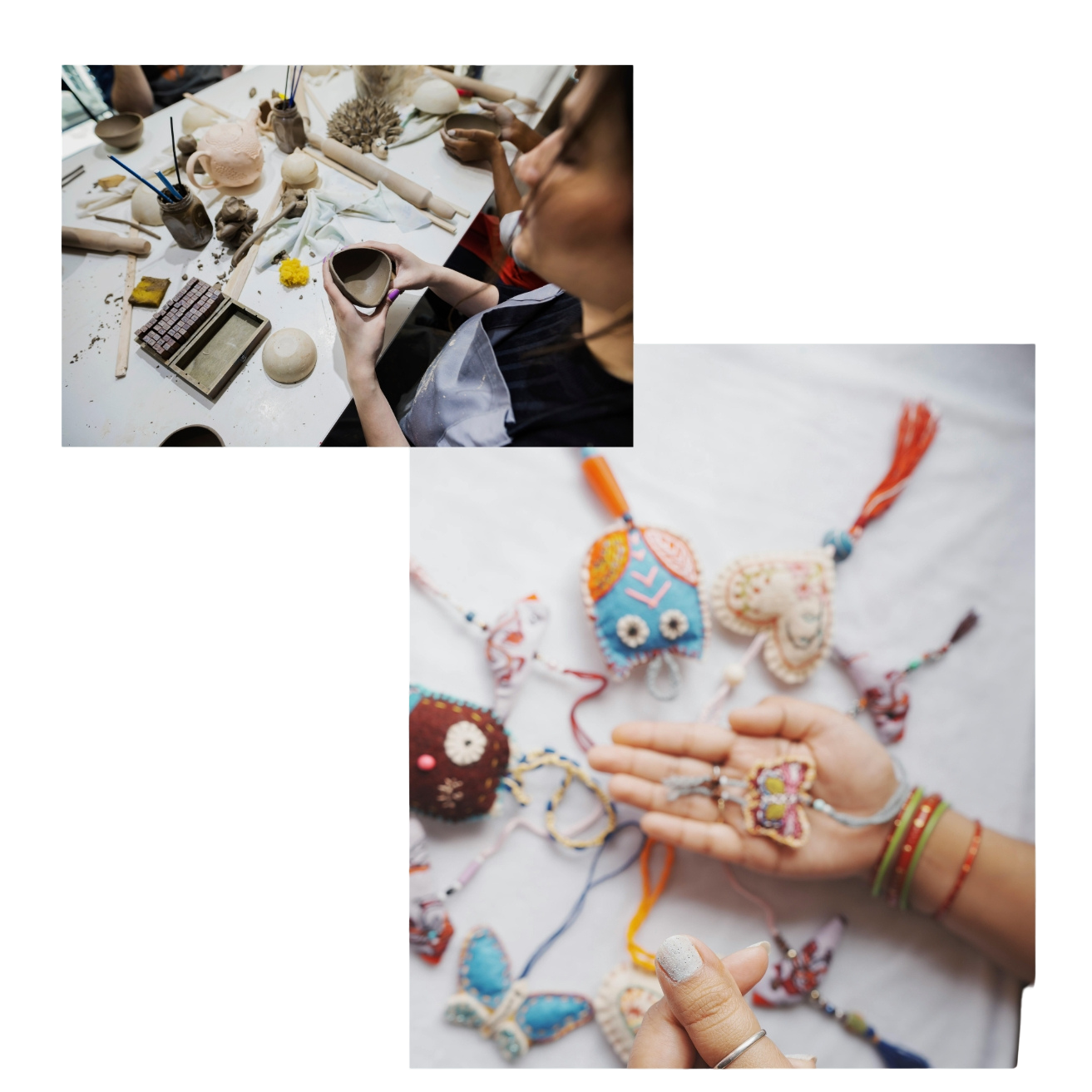
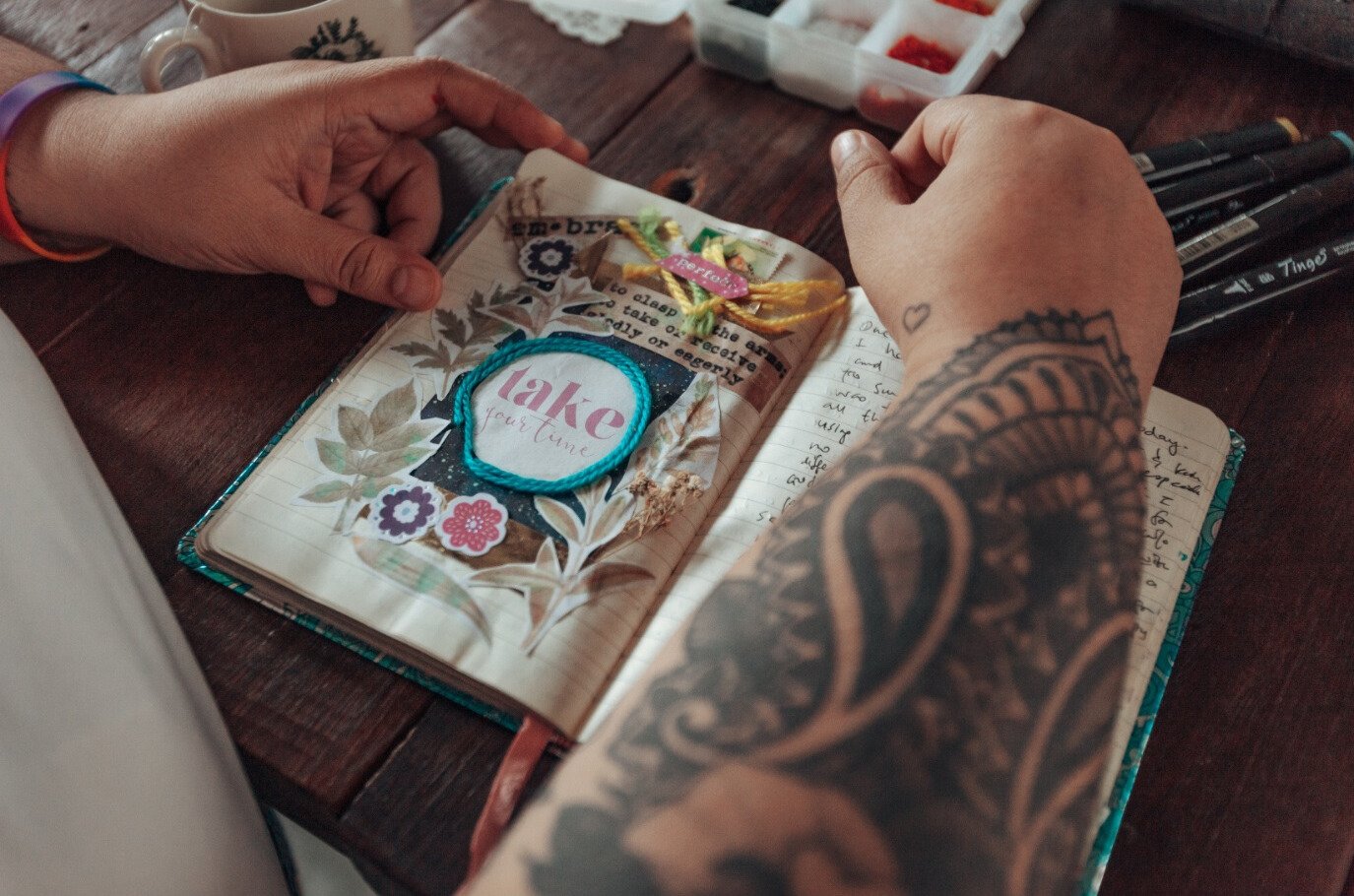
Art therapy is not only drawing or coloring. It can be the process of writing, dancing, creating a scribble map of all the thoughts in your brain, assigning a specific container you already have in your house (I personally am fond of trinket boxes) as a container that can help you hold a difficult emotion while you are struggling with it. At its core, it is an approach that helps us connect with a capacity for creativity and play, which we all have access to in our early years, but sometimes we may need a little help finding it again as adults.
Do I have to be an artist to try art therapy?
In session, what you create is never graded or evaluated. Sometimes people may think that art therapy means that I have a hidden guidebook to what your artwork means: if I just see this line over there, or this color choice over here, I will uncover something you may not want to approach just yet. However, what actually happens is that you are the one holding the keys to us processing together. I cannot and do not make any judgement or analysis without hearing your interpretation, and holding space the feelings that come up for you during/afterwards in response to art making. In fact, I don’t need to see the artwork at all if you would like to keep it private: together, we can find ways to tailor this approach to your comfort level if you are curious about exploring art therapy, but find some parts of you may carry some hesitation.
What would an art therapy session look like?
Let’s use an example of what can take place in a session if you are curious about exploring art therapy. If this is one of our first sessions and we’re figuring out a roadmap for your goals in therapy, I may invite you to create a drawing symbolizing your current state, and a drawing symbolizing where you would like to get to. If we’ve been working together for a while and we’re tackling family of origin issues, I may invite you to use clay to make a representation of your family at a specific age we’re unpacking, because clay can allow us to move and shift the representation as needed, same as how your relationships with members of your family can shift over time. It may not be that detailed and direct either: maybe we discover that writing or art making helps ground you in the session, and we can use that to help you address complex emotions. As with any other approach, there is no pressure for you to do what feels uncomfortable or unwanted, and ultimately, the extent to which we incorporate creative arts into the session depends on your specific circumstances and preferences.